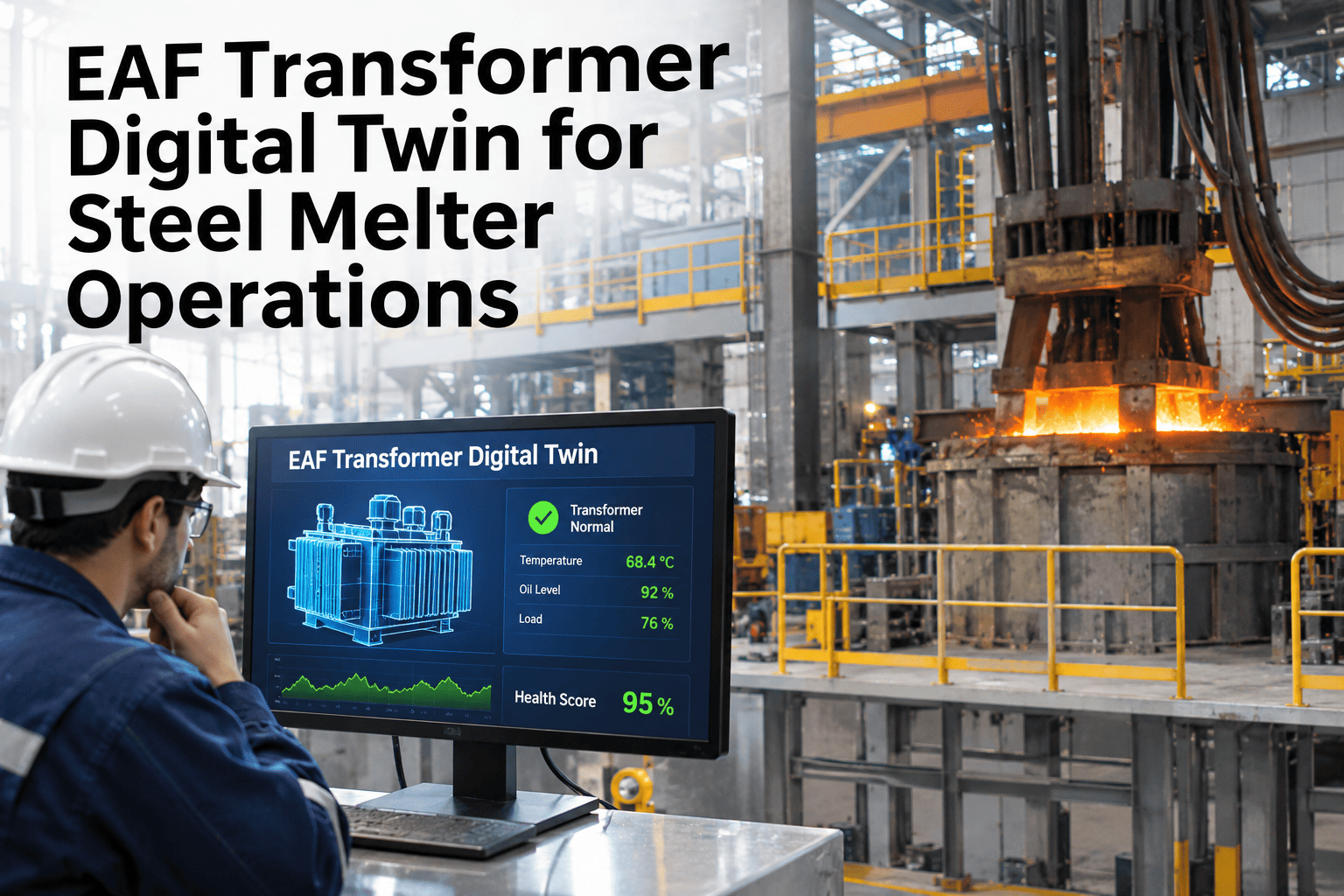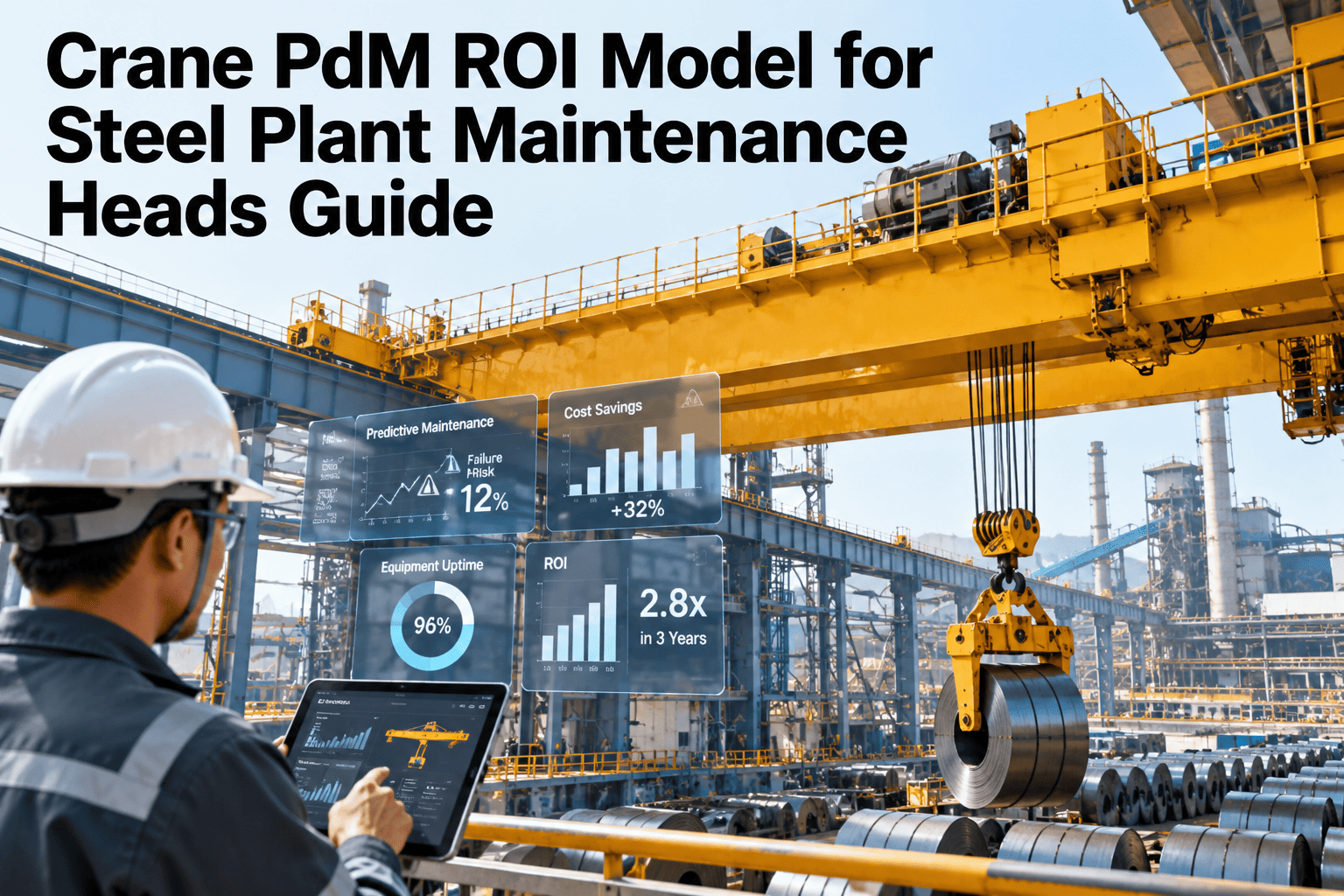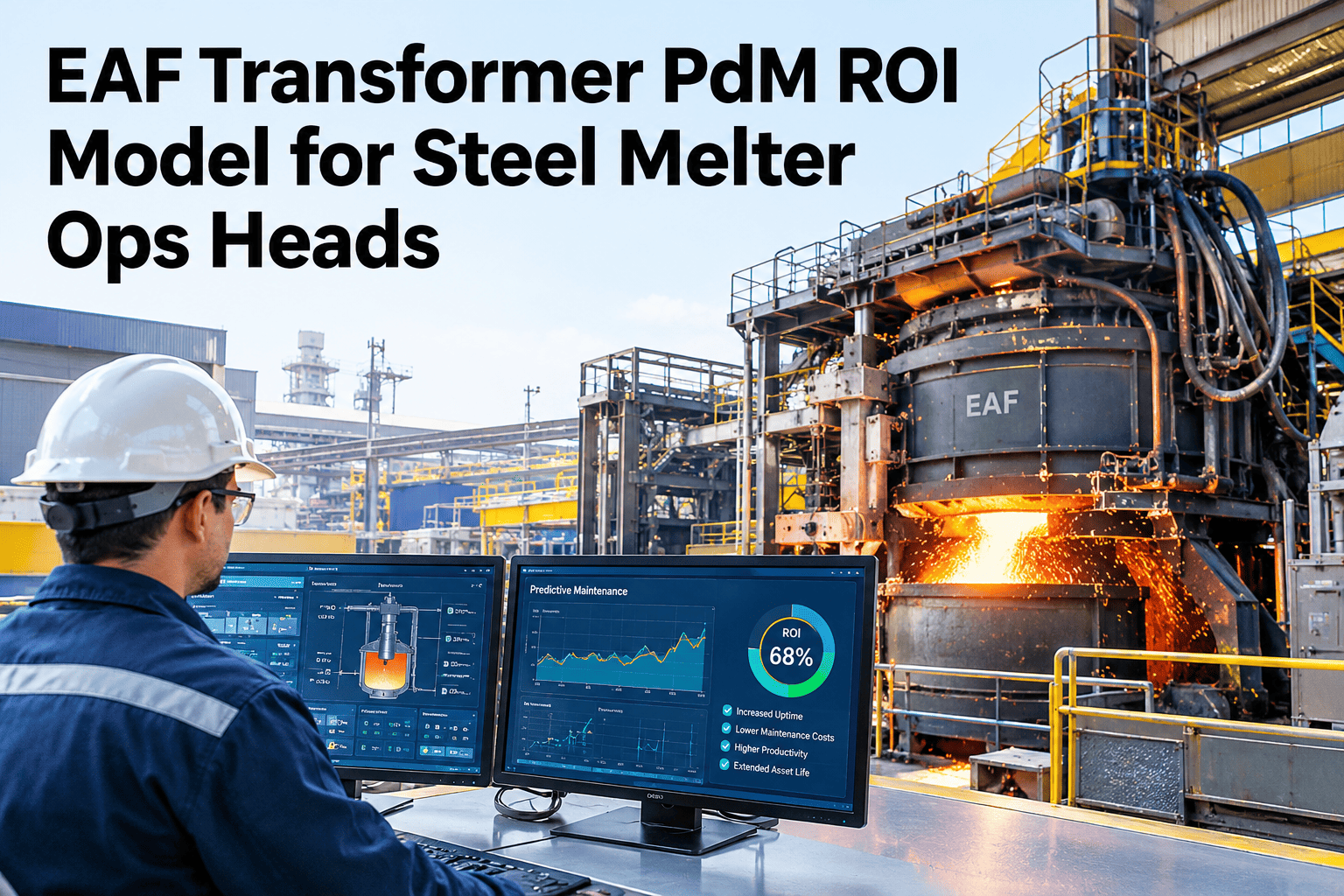
A melter operations head asking for budget to upgrade EAF transformer monitoring usually gets one question back from finance — what does this actually save, in numbers a CFO can check. A credible ROI model for transformer predictive maintenance has to stack three distinct value sources separately: the catastrophic failure avoided entirely, the extended service life bought by catching degradation early, and the downtime avoided by planning repairs into an outage window instead of an emergency stop. Blending the three into one vague "millions in savings" figure is exactly what makes finance push back. Ops heads building their own business case can walk through a transformer PdM ROI model built on their own asset data with our team.
Stack the Value Sources Separately, Not Into One Vague Number
iFactory, an on-premise AI platform for steel plant asset reliability, breaks an EAF transformer PdM business case into avoided catastrophic failure, extended life value and downtime cost avoidance — each stated on its own terms.
Why Does a Single "Millions Saved" Number Fail in Budget Review?
A blended savings figure invites the obvious question — saved compared to what, and how often does that event actually happen? Separating avoided catastrophic failure, extended life and downtime avoidance lets each be checked against its own evidence: failure rate history, typical transformer service life, and your plant's own actual repair hours. A number that cannot answer "compared to what baseline" is not really a savings estimate, it is an assertion. Ask our team how your current business case would hold up to that question.
What Each Line of the Model Actually Represents
| Value source | What it represents | What it depends on |
|---|---|---|
| Avoided catastrophic failure | Replacement cost and extended outage avoided by catching a developing fault early | Your fleet's own historical failure rate |
| Extended asset life | Capital replacement deferred by slowing insulation degradation | Current transformer age and condition trend |
| Downtime cost avoidance | Repair planned into an outage window instead of an emergency stop | Cost difference between planned and emergency repair hours |
Build Your Own Three-Line Business Case
Share your transformer fleet's age, history and current monitoring setup, and we will help structure the case.
The Inputs a CFO Will Actually Ask About
The Business Case That Survived Finance's First Challenge
An ops head presented a transformer PdM investment case with a single combined savings figure, and finance's first question — "compared to what baseline?" — stalled the approval for a quarter. Rebuilding the case as three separate lines, each tied to the plant's own failure history and repair cost data, got it approved in the next review cycle.
A Model That Gets Easier to Defend Every Year It Runs
The first version of this business case leans on industry benchmarks and best estimates for parts of the model that lack plant-specific history. Each year the monitoring program runs, the plant accumulates its own failure, repair-cost and condition-trend data, which replaces those estimates one by one and makes the next budget cycle's version of the case progressively harder to argue with.
Transformer Condition Data, Structured Into a Defensible Case
DGA & Condition Trending
Continuous monitoring provides the condition evidence each value line rests on.
Fleet Failure History
Your own transformer fleet's history grounds the avoided-failure line in real data.
Planned vs Emergency Cost Tracking
Repair cost data is tracked by type, so the downtime avoidance line uses your own numbers.
Turnkey On-Premise Deployment
Condition and cost data stay on your own server, with no outside cloud dependency.
What Ops Heads Ask About Building a Transformer PdM Business Case
What if we have no history of a major transformer failure to cite?
A low historical failure rate is itself relevant — it can be weighed against industry failure-rate ranges and the consequence severity if one did occur, rather than treated as a reason to skip the avoided-failure line entirely. Discuss how to frame this line without a failure history.
How is extended asset life actually valued?
It is typically valued as the deferred cost of capital replacement, shifted further into the future than it would otherwise occur, using your plant's own replacement cost and expected timeline. Ask support how this line is calculated.
What's the real cost difference between a planned and emergency repair?
It varies by plant, but typically includes expedited parts, overtime labor, and the production impact of an unplanned stop versus one scheduled into an existing outage window — all worth pulling from your own maintenance records. Review your own planned-versus-emergency cost gap.
How much monitoring data do we need before building this case?
Even a few months of condition trending, combined with existing maintenance and cost records, is usually enough to build a credible first version — the model improves as more data accumulates. Ask about building a first version now.
Should this case include the cost of the monitoring system itself?
Yes, a credible ROI model nets the monitoring investment against the three value lines, rather than presenting the value lines alone without the cost side of the comparison. Discuss structuring the full net case.
Build a Business Case Finance Can Actually Check
See avoided failure, extended life and downtime avoidance stacked transparently, using your own transformer fleet data.