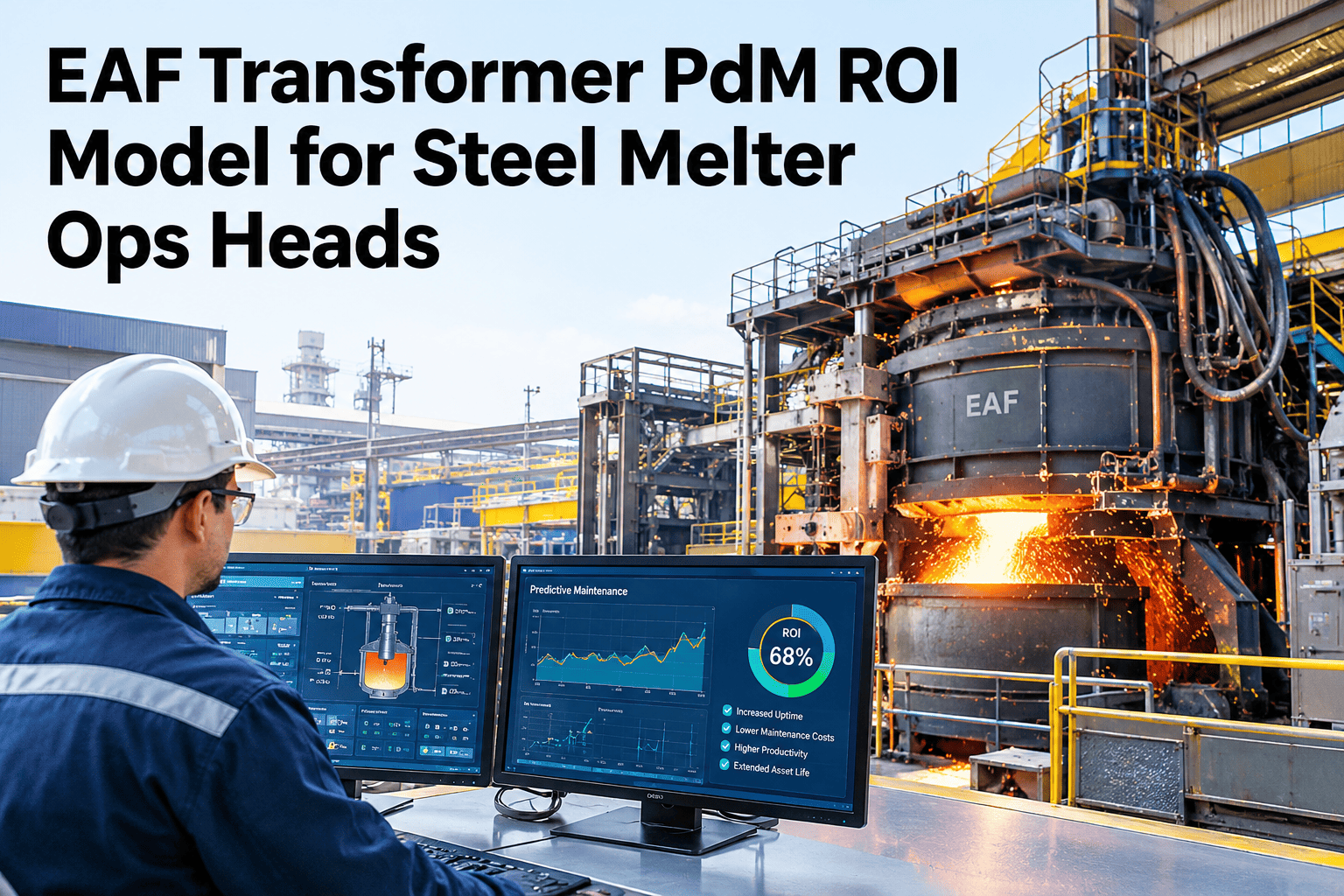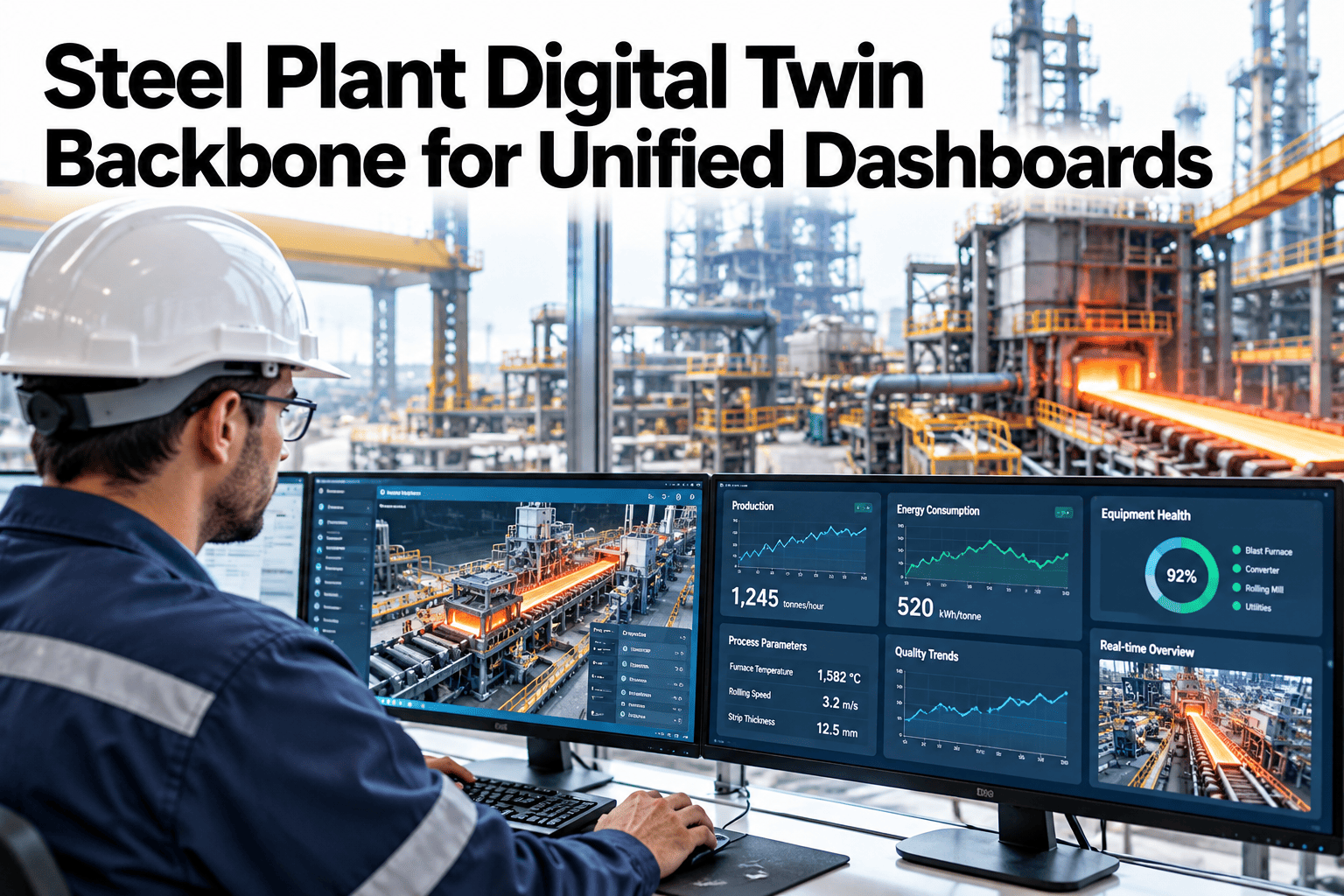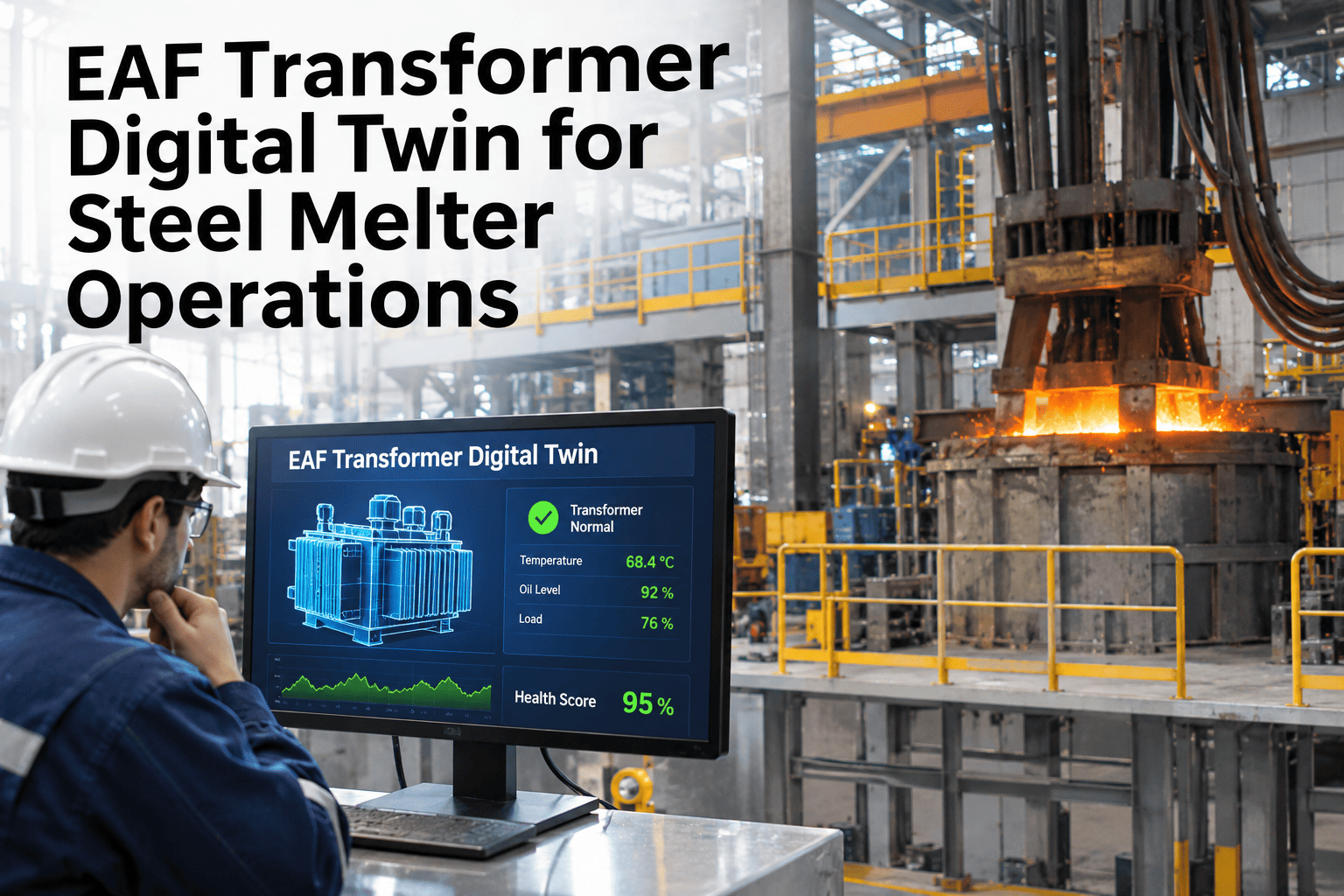
An EAF transformer lives under conditions few other transformers see — repeated arc-furnace current surges, mechanical stress from electromagnetic forces on the windings, and thermal cycling that tracks every heat rather than a steady industrial load. A digital twin that fuses thermal, electromagnetic and mechanical models with live sensor data lets an asset team simulate a loading change, a cooling fault, or a tap-changer operation before it happens on the real transformer, not after. The value is not a prettier dashboard — it is the ability to ask a what-if question about a seven-figure asset and get an answer grounded in physics and real operating history. Asset and electrical teams who want to see their own transformer's loading behavior modeled can walk through a transformer digital twin scoping session with our team.
Simulate the Loading Change Before You Try It on the Real Transformer
iFactory, an on-premise AI platform for steel plant asset reliability, fuses thermal, electromagnetic and mechanical models with live transformer data so asset teams can test a scenario before committing the real equipment to it.
Why Does an EAF Transformer Need Three Models, Not One?
A transformer on a steady industrial load can often be modeled thermally alone. An EAF transformer absorbs repeated current surges from the arc, which stresses windings mechanically and electromagnetically in ways a thermal model alone never captures. Missing either the electromagnetic or mechanical layer means the twin can predict temperature accurately while completely missing the winding displacement that actually leads to failure. This is the single most common gap in a first attempt at an EAF transformer twin — the thermal layer is the easiest to build, so it is often built alone and mistaken for a complete model. Ask our team which of your current models already cover which layer.
Model Layer, Question Answered and Data It Needs
| Model layer | Question it answers | Data it needs |
|---|---|---|
| Thermal | What will oil and winding temperature do under this load? | Load profile, ambient and cooling system data |
| Electromagnetic | How much force does this current surge put on the windings? | Current waveform, winding geometry |
| Mechanical | Is clamping pressure still holding under repeated stress? | Clamping design data, vibration and displacement readings |
Test Your Next Loading Scenario on a Model First
Share the loading or operating change you are considering, and we will show how a twin would model its effect.
From Model to Calibrated, Trusted Twin
Thermal, electromagnetic and mechanical models are built against transformer design data.
Live DGA, temperature and load data feed the model continuously.
Predictions are tuned against known operating history.
A proposed loading or operating change is tested before it happens on the real asset.
The Load Increase That Looked Fine on Temperature and Wasn't
An asset team considering a higher transformer loading target ran the scenario through the thermal model alone, which showed oil temperature staying within limits. Running the same scenario through the electromagnetic and mechanical layers showed winding force rising closer to the clamping structure's design margin than the thermal result alone would have suggested.
A Twin Earns Its Keep Across Many Small Decisions, Not One Big One
The value of a fused twin rarely shows up in one dramatic save — it shows up in the steady stream of smaller loading, scheduling and operating decisions that each get checked against a physics-grounded model instead of engineering judgment alone. Over a year, that accumulated set of better-informed calls is usually worth more than any single avoided incident.
A Fused Twin, Calibrated to Your Own Transformer
Three-Layer Model Fusion
Thermal, electromagnetic and mechanical models run together, not as separate tools.
Live Data Calibration
DGA, temperature and load readings keep the model aligned with real operating conditions.
What-If Scenario Testing
A loading or operating change is simulated before it is tried on the real asset.
Turnkey On-Premise Deployment
Model and sensor data stay on your own server, with no outside cloud dependency.
What Asset Teams Ask About EAF Transformer Digital Twins
Do we need all three model layers from day one?
Most plants start with the thermal layer, since it uses data they already collect, and add electromagnetic and mechanical layers as the use case calls for it — the full fusion matters most for loading and operating decisions near design limits. Discuss a phased build for your transformer twin.
How is this different from standard DGA-based health monitoring?
DGA monitoring tracks insulation condition from dissolved gases, while a digital twin models the physical behavior of the transformer under a proposed scenario — the two are complementary, with DGA data often feeding the twin's calibration. Ask how DGA data feeds the twin.
Can the twin predict mechanical failure before it happens?
The twin estimates how close operating conditions push the mechanical structure toward its design margin, which is a meaningful early warning, though it is a model-based estimate rather than a direct measurement of physical condition. Discuss what the mechanical layer can and cannot tell you.
How often does the twin need recalibration?
Recalibration is typically triggered by a significant change in operating pattern, a major maintenance event, or drift between predicted and measured values, rather than on a fixed calendar alone. Ask how recalibration triggers are set.
Will the twin ever control the transformer directly?
Not by default. The twin is built as an advisory tool for scenario testing and decision support, with any operating change still made and approved by the electrical and reliability team. Review how recommendations are presented to your team.
Test the Scenario on the Model, Not the Transformer
See thermal, electromagnetic and mechanical models fused with your own live transformer data.