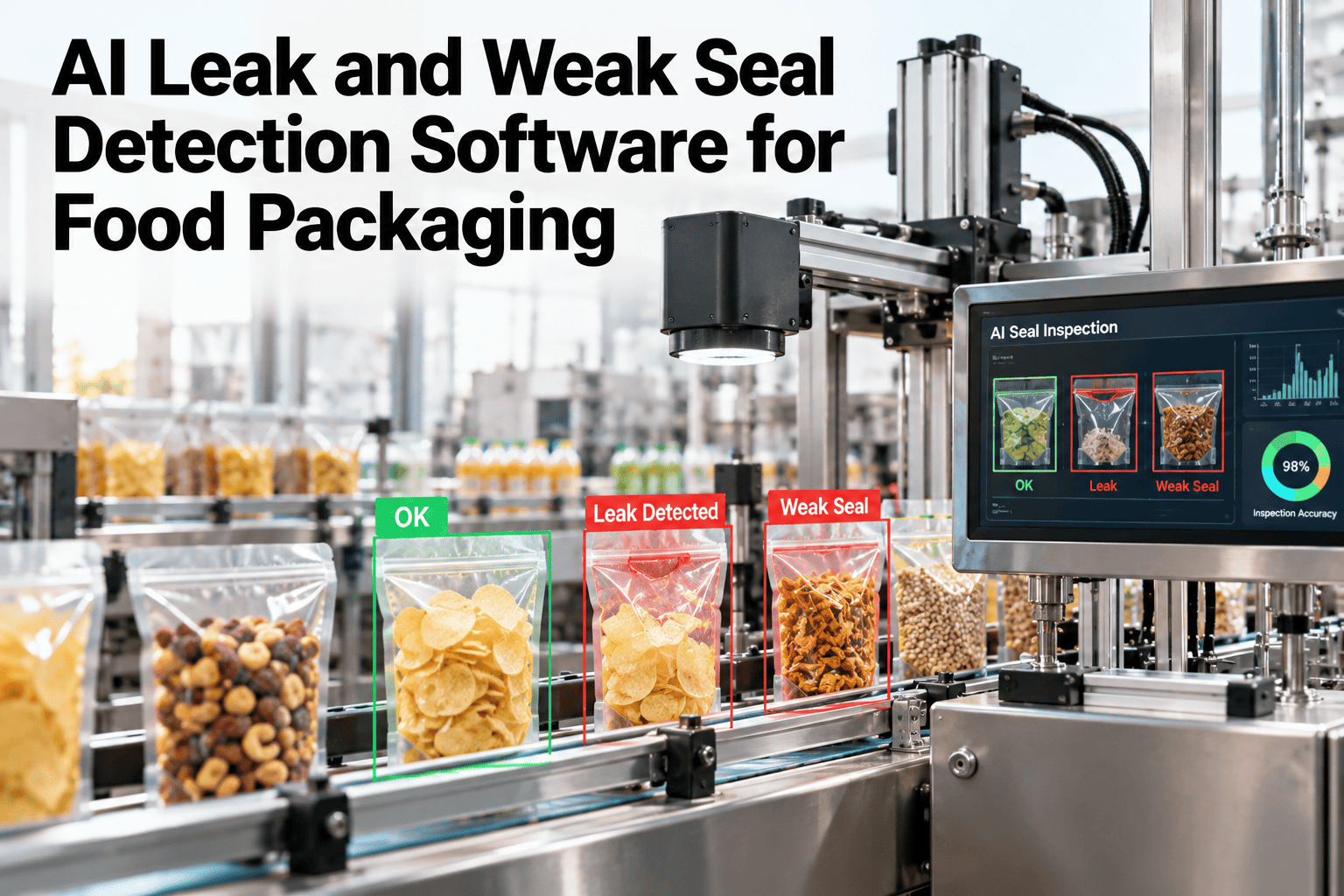
Flexible food packages fail at the seal, not the film — and most of those failures are invisible until a consumer returns a bloated pouch or a retailer pulls a short-dated SKU off the shelf. A structured leak detection program stops that before it starts by matching the right test method to each package format, running it at the right point in the production flow, and feeding the reject signal back to the sealer variable that caused it. Without that structure, a water bath at the end of the line is a comfort measure, not a control. Quality and packaging engineers who want to map a program to their own flexible formats can review their seal integrity requirements with the iFactory AI team before specifying equipment.
The Right Leak Test for Every Flexible Format
Vacuum decay, pressure decay, helium trace, CO₂ laser, and bubble emission — each method answers a different question at a different point in the quality chain.
Why Flexible Formats Are Harder to Test
A rigid container responds to pressure predictably. Flexible film stretches, and that stretching creates a pressure signal that looks like a leak even when the seal is intact. Every test method for flexible packages must be validated against the specific film construction — a parameter set that works for a 70-micron PET/PE laminate will produce false rejects on a softer BOPP structure. Film compliance is the single variable that most off-the-shelf test protocols fail to account for.
The Five Methods: What Each One Actually Does
The method descriptions below focus on mechanism and practical fit — not marketing claims. Each method solves a specific quality problem at a specific point in the production chain, and none of them substitutes for any other.
The package sits in a sealed chamber that is evacuated. A transducer monitors pressure — a leak lets gas out of the package and into the chamber, reading as a vacuum rise. Nondestructive, no consumables, inline-capable with the right cycle time. The gold standard for pouches and sachets at production speed. Film compliance validation is mandatory before deploying against a new film spec.
The package is pressurized internally and isolated; a transducer measures pressure drop over a dwell period. A leak causes measurable decay. For flexible packages, applied pressure must stay inside the film's elastic range — over-pressurizing creates a decay signal from film deformation, not from a seal failure. Best fit: retort pouches and offline QC sampling where quantitative leak rate is needed.
Helium is introduced into the package or the test environment; a mass spectrometer detects helium escaping through any leak path. Helium's small atomic radius means it passes through channels orders of magnitude smaller than those detectable by decay methods. Not suitable for inline production use — the value is in package qualification, regulatory validation, and annual audit sampling where a detection limit certificate is required.
A quantum cascade laser beam passes through the package film. CO₂ molecules absorb specific infrared wavelengths — a package that has leaked shows lower CO₂ concentration and a different absorption signal. Non-contact, no dwell time, 100% inspection at speeds above 300 ppm. Strictly limited to MAP formats where the protective atmosphere contains CO₂ at measurable concentration. Nitrogen-only MAP and air-packed formats are not candidates.
The package is submerged in water and placed under vacuum. A leak causes headspace gas to exit and form visible bubbles at the exact leak location. Destructive and slow — but the only method that physically locates the leak on the seal. Not a production method; use it exclusively for root cause investigation when a reject event needs to be traced to a specific sealer jaw section or seal feature.
See Which Method Fits Your Package Format
Book a 30-minute session. iFactory AI will walk through your specific flexible format, seal type, and line speed and identify where the current program has gaps.
Where Leaks Actually Come From
Knowing which seal feature fails most often on a given format determines where detection sensitivity should be concentrated and where offline audit frequency should be highest. The risk profile below reflects published failure mode patterns for food flexible packaging — not a universal rule, since line-specific variables dominate.
| Seal Feature | Risk Level | Primary Cause | Detection Priority |
|---|---|---|---|
| Fin seal / back seal (VFFS) | High | Film tension variation, jaw temperature excursion | Inline 100% + SPC monitoring |
| Cross seal / end seal | High | Product contamination in seal jaw zone | Inline 100%; bubble emission on rejects |
| Spout / fitment interface | High | Rigid-to-flexible transition; dual-material seal | Offline QC at defined frequency |
| Corner seals (4-side) | Medium | Uneven heat/pressure distribution at corners | Offline QC; bubble emission for location |
| Zipper / reseal channel | Medium | Channel geometry; sealer not set for zipper track | Audit at each changeover |
| Film body / laminate | Lower | Mechanical damage upstream; puncture from nozzle or guide | Inline detection catches; upstream inspection review |
Three-Layer Program Structure
A single detection method at one point in the line is not a program — it is a checkpoint. A complete program uses three layers, each doing a different job. Combining all three provides inline production control, ongoing statistical confidence, and audit-ready documentation for FSMA and retail customer requirements.
Decision Path: Selecting the Method
Work through these four questions in order. The first question that produces a definitive answer identifies the primary method for that packaging situation. Skip to the end only after a question eliminates the remaining options.
Connecting the Reject Signal to the Sealer
A reject event without a cause trail is discarded waste, not quality control. The program closes the loop only when the leak detection signal is timestamped against sealer parameters — jaw temperature, dwell time, film tension, fill level — at the moment of rejection. That connection is what turns a single event into corrective action and a trend into a maintenance trigger.
Where iFactory AI Fits
iFactory AI integrates inline leak detection system outputs with sealer PLC data, film lot records, and batch traceability in one platform. The result is that a rejection cluster is correlated to a sealer condition automatically, rejection rate SPC charts flag trending issues before they reach a hold threshold, and HACCP monitoring records are generated from inline data without manual entry.
Every rejection is stored against batch, format, line, and sealer identity — retrievable for any audit without manual log reconstruction.
Rejection rates tracked in real time against control limits by format and shift. A trending rate alerts before it becomes a batch hold.
Jaw temperature, dwell, and pressure logs are matched to rejection events automatically — so the cause of a cluster is visible in minutes, not after a manual review.
CCP monitoring records for seal integrity are produced from inline detection data — reducing manual paperwork and keeping FSMA documentation current.
iFactory AI arrives pre-configured on an NVIDIA server — rack it, connect power and Ethernet, and leak detection data integration begins. Scope includes network setup, PLC and sealer integration, ERP/MES connection, operator training, and 24×7 remote monitoring.
Frequently Asked Questions
Can vacuum decay test packages with liquid contents, not just gas headspace?
Yes. ASTM F2338-24 addresses this specifically — when the leak path may be blocked by liquid, the chamber is evacuated below the liquid's vaporization pressure, causing any liquid at the leak to volatilize and produce a detectable gas signal. Test parameters must be validated per liquid type and fill level, since vaporization characteristics differ. Teams working through this setup for a liquid-filled format can walk through the parameter validation approach with iFactory AI before specifying equipment.
How do we set the rejection threshold, and how often should it be reviewed?
The threshold sits between the vacuum decay range of confirmed non-leaking control packages and the range of packages with calibrated leaks at the smallest size defined as unacceptable in your HACCP plan. It must be reviewed — and revalidated if necessary — whenever film construction, seal geometry, product fill characteristics, or inline equipment changes. Calendar-only review cycles miss the most common trigger: a film specification or supplier change. See how iFactory AI tracks threshold validity against film lot changes on a live line.
Is helium trace required for food packaging, or only pharmaceutical?
Not mandated for food under FSMA, but it is the most capable method for demonstrating that a package construction meets a defined sub-threshold leak specification during qualification. For infant formula, medical nutrition, and retort ambient-stable products where very small leaks represent real food safety risk, helium trace provides an evidence tier that pressure and vacuum decay cannot reach. It is also the method of choice when a packaging change requires full revalidation for a retail customer or regulatory submission. Contact the iFactory AI support team to discuss which validation tier fits your product category.
Our line runs above 300 packs per minute — which methods can keep up?
CO₂ laser systems have no dwell time requirement and are inherently suited to speeds above 250 ppm for CO₂-MAP packages. For non-MAP formats at high speed, inline vacuum decay remains feasible but requires purpose-built high-speed equipment with pre-formed test chambers and fast-response transducers — not a bench-top instrument adapted to the line. At 300 ppm, available dwell time per package is under 200ms; confirm that figure against the transducer stabilization time specified by the equipment supplier before committing. Discuss your line speed requirements with the iFactory AI team to identify the right inline architecture.
What goes wrong if film compliance isn't accounted for in the test parameters?
Film deformation under vacuum produces a pressure decay signal that is indistinguishable from a small leak. If parameters from one film laminate are applied to a more compliant film, the result is a high false reject rate — teams then incorrectly assume the sealer has a problem and adjust dwell or temperature, potentially masking a real seal quality issue. Every film construction and pouch geometry requires independent parameter validation. Revalidation after any film supplier or spec change is not optional. See how film compliance parameters are managed across multiple formats in iFactory AI.
Build a Program That Finds the Cause, Not Just the Leak
iFactory AI connects inline leak detection data to sealer parameters, batch records, and HACCP documentation — so a rejection event leads directly to the sealer condition that caused it. Book a walkthrough using your own flexible format and line.