Food packaging lines rarely fail because the product inside is wrong. They fail at the edges — the spoon that never dropped into the cup, the straw sleeve that missed the juice box, the seasoning sachet or silica packet that stayed in the hopper while the case moved on to sealing. A missing component sits inside a checkweigher's tolerance band, slips past an operator watching a line running at hundreds of packs a minute, and reaches a shelf looking exactly like every compliant pack around it. Food manufacturers comparing software for this problem need to know what actually catches an absent scoop, lid, or insert before a case is sealed, not after a complaint arrives, and see how iFactory AI screens component completeness on a real packaging line.
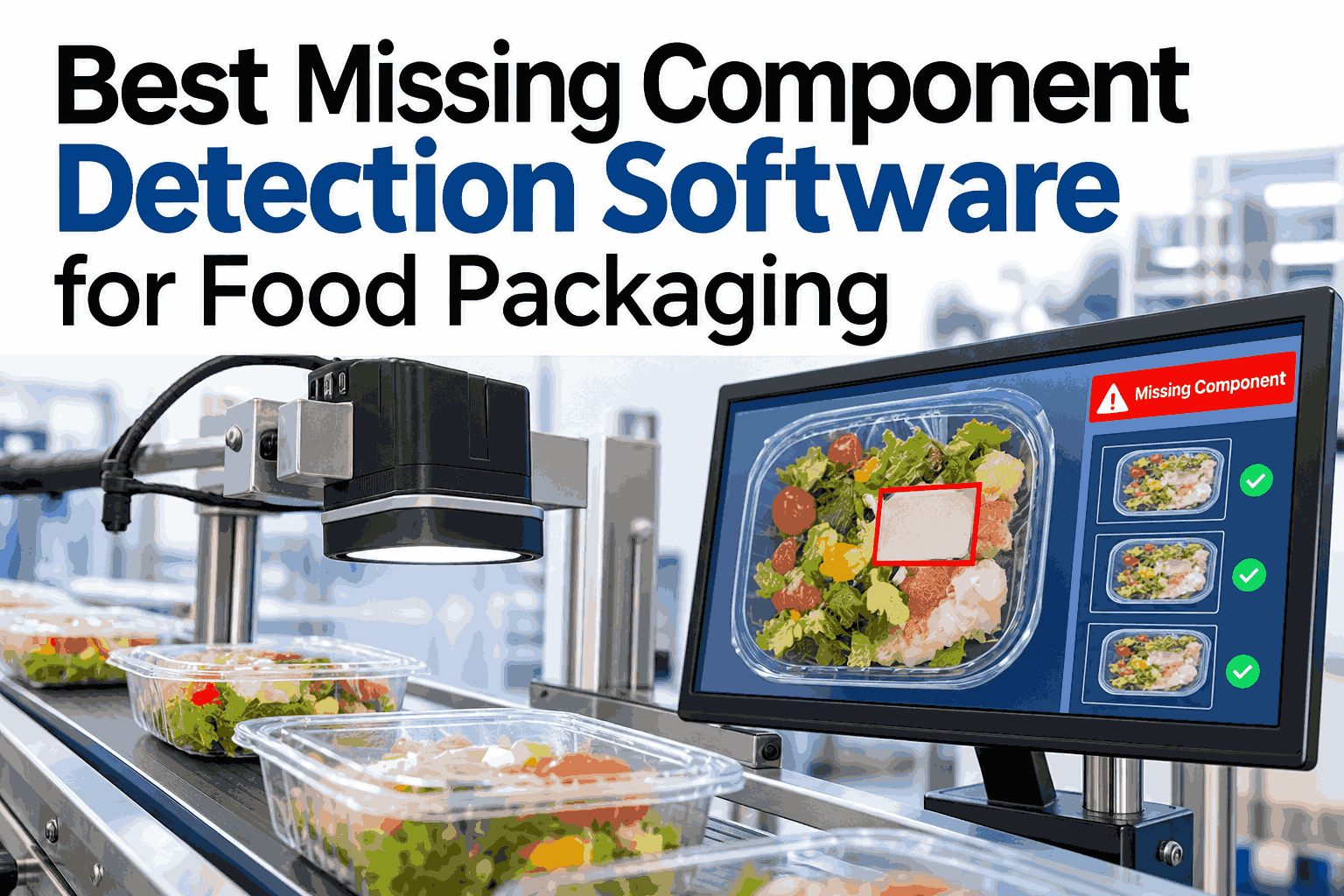
Best Missing Component Detection Software for Food Packaging
From the filler to the case sealer, every station on a packaging line is a place where a straw, lid, scoop, or insert can go missing. iFactory AI watches each checkpoint and holds the pack before it ever reaches the sealer.
Why a Missing Scoop or Lid Still Reaches the Case
A missing component is one of the few defects that can pass every other check on a line and still be wrong. The pack weighs correctly, the seal looks intact, and the label scans fine, so nothing stops it.
Weight Tolerance Hides Small Parts
A missing spoon or lid often weighs a few grams. On a checkweigher tuned to accept normal fill variation, that difference sits comfortably inside the accepted range and the pack passes as good.
Reflective and Transparent Packaging Hides the Part Visually
A clear scoop against a foil seal, or a white straw against a white carton sleeve, is genuinely difficult for a basic sensor or a tired operator to pick out, especially under line lighting that changes through a shift.
Component Feeders Jam Without Stopping the Line
A feeder bowl for inserts or sachets can empty, jam, or double-feed without necessarily triggering a line stop, especially on older equipment that was never built to report feeder state upstream.
Human Inspection Cannot Hold Pace With Modern Line Speeds
An operator can catch an obvious miss at low speed, but attention naturally drifts at line speeds measured in hundreds of packs per minute, and a missed component looks identical to a correct one from a few feet away.
None of these causes point to carelessness on the line. They point to a detection gap: the tools in place were built to catch weight, seal, and label problems, not the specific failure mode of one part simply not being there.
Where the Cost Actually Lands
That gap rarely costs anything on the line itself. It costs downstream, in a return, a review mentioning a missing spoon, or a retailer chargeback for an incomplete case, each of which runs far higher than a reject pulled at the insert station would have.
Checkweigher, Vision, or Both: How Detection Actually Works
The two technologies most commonly used for this problem catch different failure patterns, and the gap between them is exactly where a missing component usually slips through.
A dynamic checkweigher is still the right tool for catching a heavy missing part cheaply and fast. Vision closes the gap it leaves open: light parts, reflective packaging, and position or variant errors a scale was never built to see.
Why Pharmaceutical and Beverage Lines Already Combine Both
Checkweighers paired with vision are not a new idea; pharmaceutical tablet and liquid lines have long combined the two because a scale alone cannot reliably confirm every dose or component is present, and the same logic applies directly to a food line carrying a spoon, lid, or scoop rather than a tablet.
The Components That Most Often Hide From Standard Checks
Not every missing part behaves the same way on a line, and the software that catches one reliably may still miss another.
Straws and Straw Sleeves
A light-colored straw against a light carton, applied at speed by a glue applicator, is one of the hardest items to confirm by eye and one of the most common sources of consumer complaints on juice and dairy cartons.
Spoons, Forks, and Cutlery Kits
Cutlery dropped into meal trays or snack cups by a feeder can jam without a visible line stop, and a missing utensil on a children's or ready-to-eat product carries real consumer-safety weight beyond the return itself.
Lids and Closures
A missing or misapplied lid is a seal-integrity issue as much as a completeness issue, and it is often caught only after a leaking case shows up at a distribution center rather than at the point it happened.
Scoops and Measuring Inserts
A transparent plastic scoop resting against a reflective foil seal is close to invisible to a basic sensor, which is exactly the scenario where a trained vision model earns its keep over a simple presence sensor.
Sachets, Seasoning Packets, and Desiccants
These are light, small, and often added at a separate station from the main fill, which means a missed drop here is invisible to a checkweigher calibrated around the primary product's weight.
Secondary Packaging Inserts
Coupons, recipe cards, and instruction sheets are low-risk individually but high-volume across a run, and a feeder running dry for a few minutes can produce a batch of incomplete cases before anyone notices.
Most lines carry two or three of these component types at once, which is why a detection approach built around one specific part rarely transfers cleanly to the next changeover without retraining or reconfiguration.
What to Weigh Before Choosing a Detection Approach
The right answer depends on what is actually going missing on a specific line, not on which technology is being marketed hardest this year. Walking through these five factors against real production data, rather than a vendor's generic spec sheet, is what keeps the eventual choice matched to the actual failure pattern rather than to whichever system demoed best.
Component weight relative to total pack weight
If the missing part is a small fraction of total pack weight, a checkweigher alone will not reliably catch it, and vision or a combined approach becomes the deciding factor.
Packaging material and surface finish
Clear plastic, foil, and high-gloss film all change how reliably a camera system can distinguish a present component from an absent one, and this should be tested against real packaging, not a sample photo.
Line speed and reject-station response time
Detection is only useful if the reject mechanism can act on it before the pack moves past the station, so the inspection and rejection windows need to be sized to the line's actual throughput.
How many SKUs and component variants run on the same line
A line that alternates between several component types needs a system that can be retrained or reconfigured quickly per changeover, not one that requires a service call for every new SKU.
Integration with existing PLC and reject hardware
A detection system that cannot talk to the line's existing reject actuator and HMI ends up as a reporting tool rather than a prevention tool, which defeats the purpose of catching the miss before shipment.
Walk through these criteria against your own line's components and packaging before comparing vendor spec sheets in isolation.
An Illustrative Line Before and After a Completeness Check
The figures below describe a composite, illustrative scenario for a line adding a dedicated completeness check at the insert station, not measured results from a specific customer.
Consumer complaints and distribution-center spot checks were the primary way a missing component was discovered, well after the case had left the plant.
A completeness check positioned right after the insert drop pulled incomplete packs before the case sealer, with the reject logged against the shift and feeder that produced it.
The operational value in a scenario like this is not a single percentage. It is moving the point of discovery from a customer's kitchen back to a station the line can still react to.
Getting a Completeness Check Running on an Existing Line
Adding this kind of check rarely means rebuilding the line. It usually means adding one inspection point and wiring it into a reject mechanism that may already exist for other reasons.
Identify the Highest-Risk Component
Pull recent complaint and rework data to find which specific component, straw, lid, scoop, or insert, actually drives misses on this line rather than guessing.
Place the Check Right After the Drop Point
The inspection station belongs immediately after the component is added and before the next irreversible step, usually the case sealer, so a miss can still be pulled cleanly.
Train Against Real Packaging, Not Stock Images
A model trained on the mill's actual film, foil, and lighting conditions will generalize far better than one trained on generic reference photos, especially for reflective or transparent components.
Connect the Reject to a Logged Reason Code
A reject that is logged against a specific component, feeder, and shift turns a single catch into a pattern the maintenance team can act on, rather than a one-off stop.
Frequently Asked Questions
Can a checkweigher alone catch a missing straw or scoop?
Usually not reliably. A straw or scoop is often a small fraction of total pack weight, so its absence can sit inside the tolerance band a checkweigher is tuned to accept. See which of your components actually fall inside that blind spot.
Does this kind of inspection slow down a packaging line?
A properly placed inline check is sized to the line's existing throughput and runs inside the normal cycle time, so it does not add a separate slow step. The reject station still needs enough reaction time to pull a flagged pack cleanly, and that timing can be checked against your line's actual speed before installation.
How does a vision system handle a clear scoop against a foil seal?
A model trained specifically on that packaging's lighting and reflectivity can learn the subtle contrast a transparent part creates against foil, which a simple presence sensor usually cannot. This is one of the clearer cases where training data from the actual line matters more than the camera hardware itself, and a quick look at your packaging will show how well it would train.
What happens when the line changes over to a different component or SKU?
A software-based system can usually be reconfigured or retrained for a new component without new hardware, provided the new part and packaging were included in setup. Check changeover support for your specific SKU mix before assuming it is a one-time setup.
Is missing-component detection only relevant to large manufacturers?
No. A smaller plant running one or two lines often feels a missing-component recall or complaint spike proportionally harder, since it has less volume to absorb the cost of rework or returns. Talk through what a right-sized deployment looks like for a single line, rather than assuming this is built only for large plants.
Stop Missing Components at the Line, Not at the Complaint Desk
Bring a sample of your packaging and your most-missed component to a short session and see how iFactory AI would inspect it on your own line.