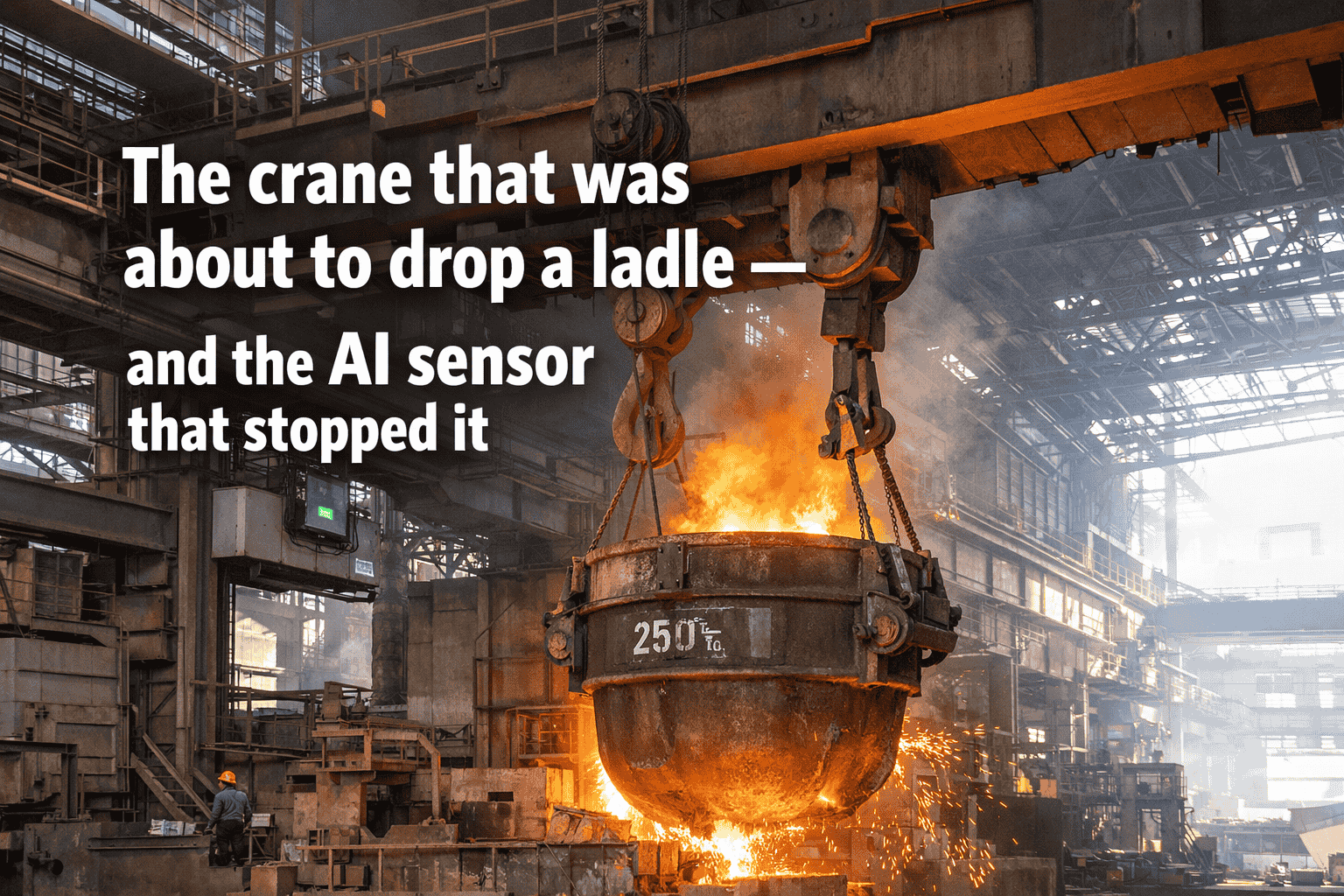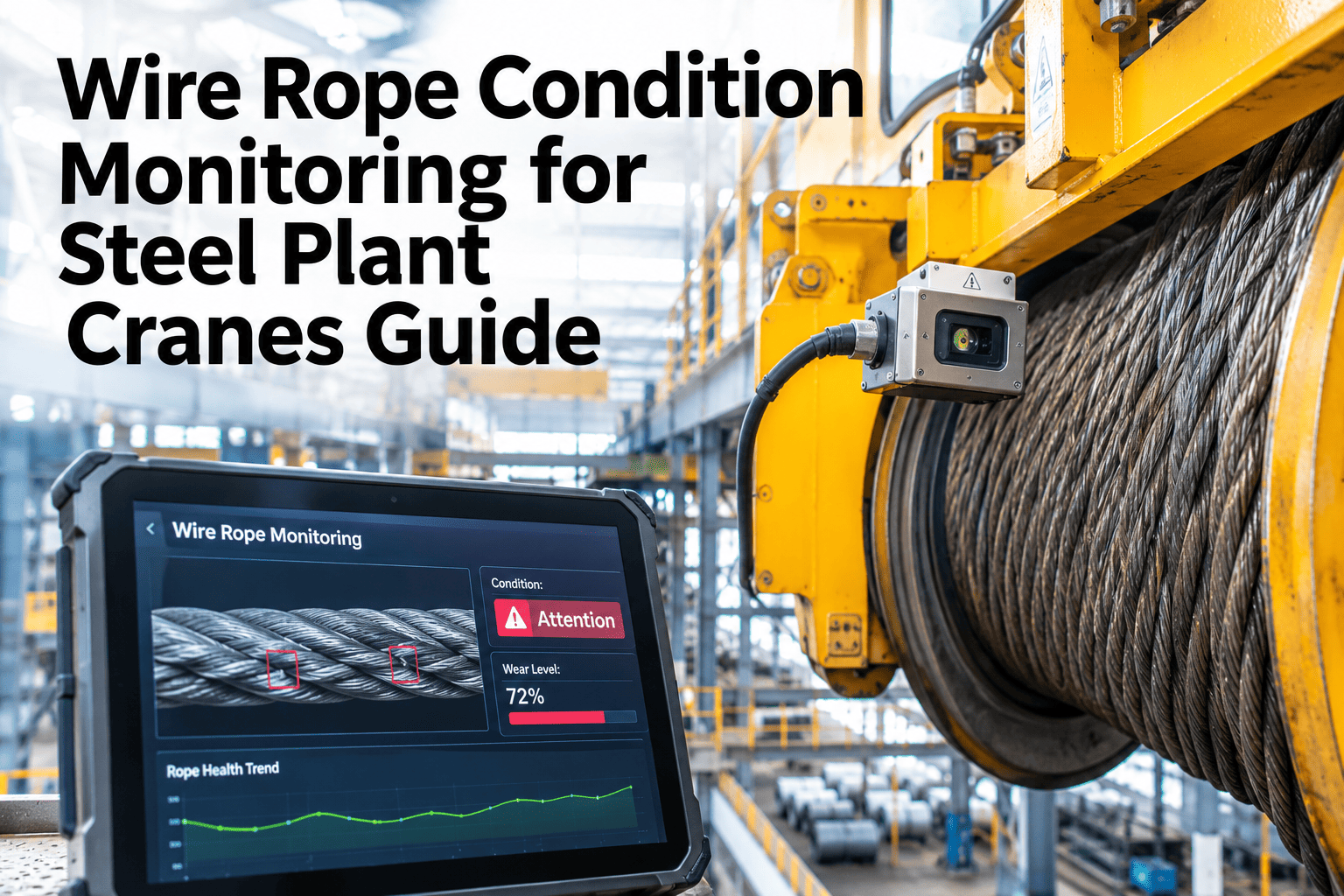
A wire rope can look fine from the outside and still be losing load-bearing capacity on the inside, because stress corrosion cracking and internal wire fatigue develop beneath the outer strands where a visual inspection simply can't see them. ASME B30.2 sets the discard criteria — six randomly distributed broken wires or three in one strand per rope lay — but a visual count alone misses internal loss of metallic area that magnetic rope testing is specifically designed to detect. iFactory AI's steel operations team can review your current rope inspection program against these three methods before your next scheduled inspection.
The Damage You Can't See Is the Damage That Fails Without Warning
Magnetic rope testing, visual inspection integration and a disciplined lubrication cadence together eliminate the biggest risk in wire rope management: internal wire loss nobody can see until it's too late.
Why Visual Inspection Alone Leaves the Biggest Risk Uncovered
A visual inspection catches broken wires, corrosion and bird-caging on the rope's outer surface, which is genuinely useful and required, but it has no way to see internal wire damage — reduced diameter, loss of elasticity, stiffness from core failure or poor lubrication — building beneath the surface. Steel mill environments accelerate this kind of degradation specifically: stress corrosion cracking develops in high-strength wire when chloride contamination contacts stressed wire under sustained tension, a mechanism no visual count will ever catch before it's advanced.
Counted against ASME B30.2 limits — 6 random or 3 in one strand per rope lay.
Invisible to a visual check, caught only by magnetic testing.
Surface corrosion is visible; the fatigue it accelerates internally often isn't.
Poor lubrication accelerates core failure well before external symptoms show.
How Magnetic Rope Testing Actually Works
The rope passes through a magnetic head that saturates a section of steel and reads how the field changes, revealing internal loss of metallic area that a visual count cannot detect. Our team can walk through how MRT integrates with your current inspection schedule.
Operators check for obvious broken wires, kinks and surface corrosion before each shift.
A full documented measurement against the rope's own historical record.
Finds internal wire loss and loss of metallic area no visual check can see.
Protects the core from the moisture and friction that accelerate internal failure.
Discard Criteria at a Glance
| Damage Type | Detection Method | ASME B30.2 Criterion |
|---|---|---|
| Broken wires | Visual count per rope lay length | 6 random or 3 in one strand |
| Internal wire loss | Magnetic rope testing | Loss of metallic area beyond manufacturer threshold |
| Diameter reduction | Measurement against baseline | Reduction beyond specified percentage of nominal diameter |
Add Magnetic Testing to Your Current Rope Program
Share your current rope inspection and replacement records, and see where magnetic testing would close the biggest visibility gap.
A Composite Scenario: The Rope That Passed Every Visual Check
Picture a ladle crane's main hoist rope that had passed every scheduled visual inspection for over a year, showing no broken wires anywhere near the ASME discard threshold.
A first magnetic rope test, added as a new layer to the existing visual program, found internal loss of metallic area consistent with stress corrosion cracking well advanced beneath the surface, despite the rope's clean visual record. Replacing the rope proactively avoided what the internal damage pattern suggested was a genuine failure risk under sustained load. The scenario illustrates why visual-only programs miss this risk category; actual findings depend on each rope's own service history.
Where iFactory AI Fits
iFactory AI logs visual inspection findings, magnetic rope test results and lubrication records against each rope's own history, trending wear rate and flagging approach to discard criteria before a scheduled inspection would catch it.
Visual, magnetic and lubrication data all tracked against one rope history.
Wear rate flagged before it reaches discard criteria, not just at the next scheduled check.
Every inspection and test result stored for audit and insurer review.
Frequently Asked Questions
Frequency depends on duty class and service conditions, but many steel plants add magnetic testing to their periodic detailed examination cycle, particularly for ladle and charging crane ropes exposed to the highest fatigue and corrosion risk. Set a testing cadence for your crane fleet.
The rope passes through the magnetic testing head during normal operation in many setups, which means testing can often be integrated into routine operation rather than requiring extended downtime. Ask about in-service testing options for your cranes.
Poor or inconsistent lubrication accelerates core failure and internal fatigue by allowing moisture and friction to reach the rope's inner wires, which is why a fixed lubrication cadence is treated as a prevention measure, not just routine upkeep. Review a lubrication schedule for your rope types.
Broken wires are counted within a defined rope lay length, with six randomly distributed or three in one strand triggering discard consideration, and that count should be documented and compared against the rope's prior inspection records to catch an accelerating trend. Review discard criteria application for your rope inspections.
Modern independent wire rope core designs used in steel mill cranes are generally engineered for roughly 10 to 15 years of service at rated load and duty cycle, though actual life varies significantly with duty class, environment and inspection discipline. Discuss expected service life for your crane's duty class.
See the Rope Damage a Visual Check Alone Can't Find
iFactory AI combines magnetic rope testing, visual inspection and lubrication tracking into one rope record, trending wear before it reaches discard criteria.