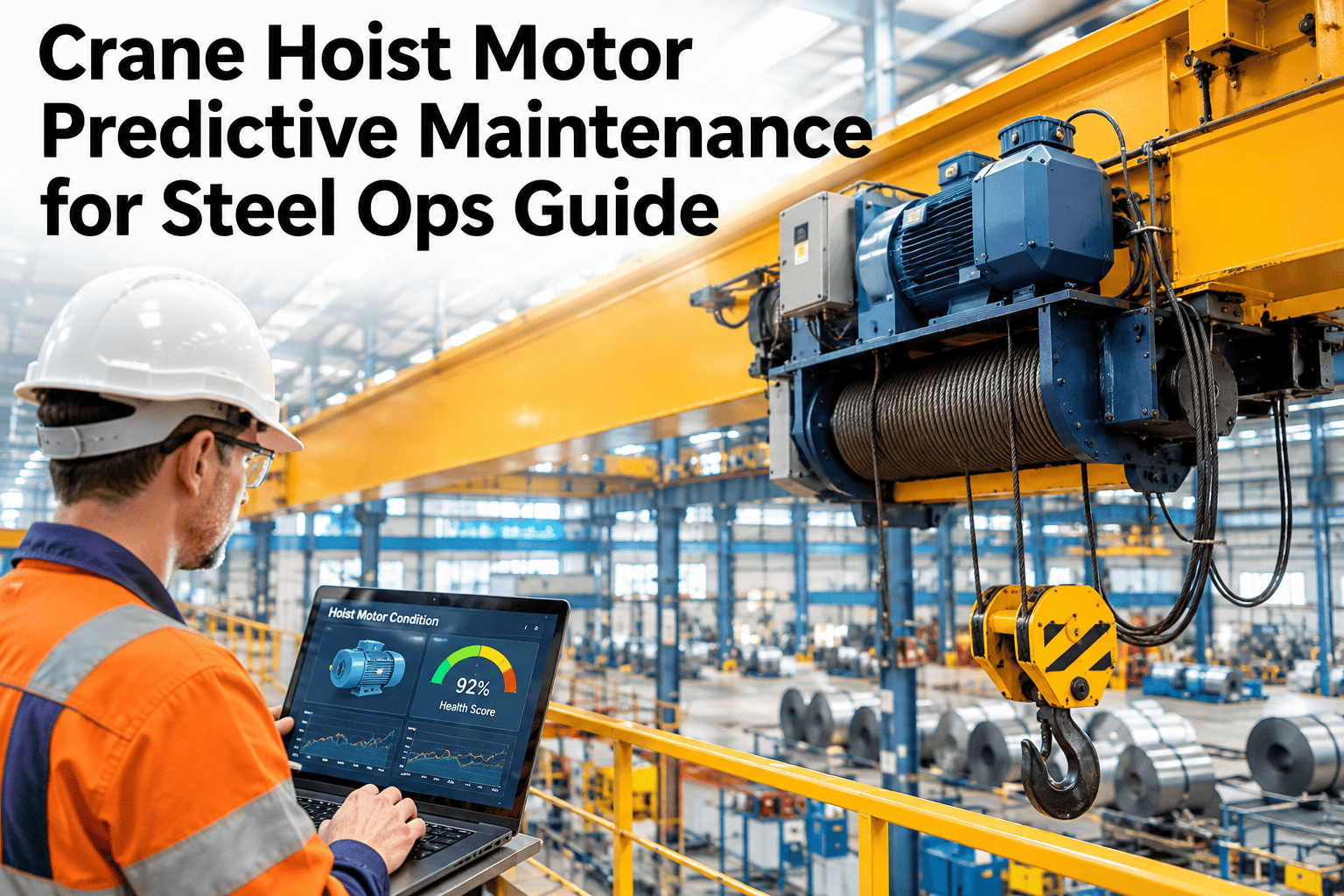
A steel plant crane doesn't fail during a scheduled inspection, it fails mid-lift, with a load in the air, and a hoist motor is one of the components most likely to give a usable warning before that happens if anyone is actually watching for it. Current signature analysis, thermal profiling and duty-cycle tracking together catch a motor's developing issues — winding degradation, bearing wear, overheating under heavy duty class — well before a crane goes down mid-shift. iFactory AI's steel operations team can review your own hoist motor data against these three signal types before your next PM cycle.
A Crane Fails Mid-Lift, Not During Its Inspection Window
Current signature analysis, thermal profiling and duty-cycle tracking catch a hoist motor's developing issues before a crane goes down with a load in the air.
Why Hoist Motors Need Their Own Monitoring Logic
Ladle cranes, charging cranes and slab-handling cranes carry multi-ton loads across a live steel plant floor on every shift, operating at continuous heavy duty in extreme heat and dust, and a hoist motor under that kind of duty cycle degrades differently than a general industrial motor running a light, intermittent schedule. Not every crane in a plant needs the same level of instrumentation — duty class and how often a crane lifts near capacity should drive where monitoring budget goes first.
Electrical signature changes reveal winding degradation before a mechanical symptom appears.
Heat buildup under sustained heavy lifts signals developing winding or bearing stress.
Actual load and cycle frequency against the motor's rated duty class.
A ladle crane's continuous heavy duty warrants closer monitoring than a light-use bay crane.
Monitoring Priority by Crane Type
Instrumentation budget should follow risk, not be spread evenly. Our team can help prioritize which cranes in your fleet need full instrumentation first.
| Crane Type | Typical Duty Class | Monitoring Priority |
|---|---|---|
| Ladle crane | Continuous heavy duty | Full instrumentation — current, thermal, duty cycle |
| Charging crane | Heavy duty, high cycle count | Full instrumentation recommended |
| Slab-handling crane | Moderate to heavy duty | Current signature and thermal, duty cycle as budget allows |
| Light bay crane | Intermittent, light duty | Basic monitoring, lower priority |
What Each Signal Catches
Detects winding insulation degradation and rotor bar issues from electrical signature changes.
Tracks heat accumulation during heavy lifts against the motor's safe thermal envelope.
Flags when actual usage is exceeding the motor's rated duty class over time.
See Which of Your Hoist Motors Are Running Hottest
Share recent current, thermal and duty-cycle data from your highest-duty cranes and see which motors are trending toward a problem.
A Composite Scenario: The Motor That Was Quietly Overworked
Picture a slab-handling crane whose hoist motor had been rated for moderate duty but was, in practice, running cycle counts and load frequency closer to a continuous heavy-duty crane as production volumes grew over several years.
Duty-cycle tracking showed the motor's actual usage had drifted well past what its PM schedule assumed, and thermal profiling confirmed heat buildup during peak shifts consistent with that overwork. Upgrading the PM frequency and monitoring level for that motor, rather than waiting for a failure to reveal the mismatch, avoided an unplanned mid-shift stop. The scenario illustrates the pattern; actual duty drift depends on each crane's own production history.
Where iFactory AI Fits
iFactory AI monitors hoist motor current signature, thermal profile and duty cycle continuously, prioritized by crane duty class, so a developing motor issue surfaces as a scheduled repair instead of a mid-lift failure.
Current, thermal and duty-cycle data tracked without interrupting crane operation.
Monitoring budget directed to the cranes carrying the most risk.
Actual usage compared against rated duty class to catch quiet overwork.
Frequently Asked Questions
Ladle and charging cranes running continuous heavy duty typically warrant priority, since their failure risk and consequence are both highest, while light-use bay cranes can usually run on basic monitoring without the same level of investment. Get a prioritized monitoring plan for your crane fleet.
Changes in the motor's electrical current signature can reveal winding insulation degradation or rotor bar issues well before they produce a mechanical symptom an operator would notice, giving a meaningfully earlier warning window. Ask how current signature monitoring is set up.
Yes, comparing actual lift frequency and load against the motor's rated duty class over time can show when a crane's real usage has drifted beyond what its original PM schedule assumed, which is a common and often unnoticed risk as production volumes grow. Review your own duty-cycle data against motor ratings.
Current, thermal and duty-cycle sensors are typically fitted without interrupting crane operation, since they attach to existing motor and drive systems rather than requiring a teardown to install. Confirm installation requirements for your crane models.
Warning windows vary by failure mode, but current signature and thermal trends generally give enough lead time to schedule a repair during a planned maintenance window rather than discovering the issue mid-lift. Discuss typical lead times for your motor types.
Catch the Hoist Motor Problem Before It Stops a Lift
iFactory AI monitors current signature, thermal profile and duty cycle on your highest-risk cranes, so a developing issue becomes a scheduled repair.