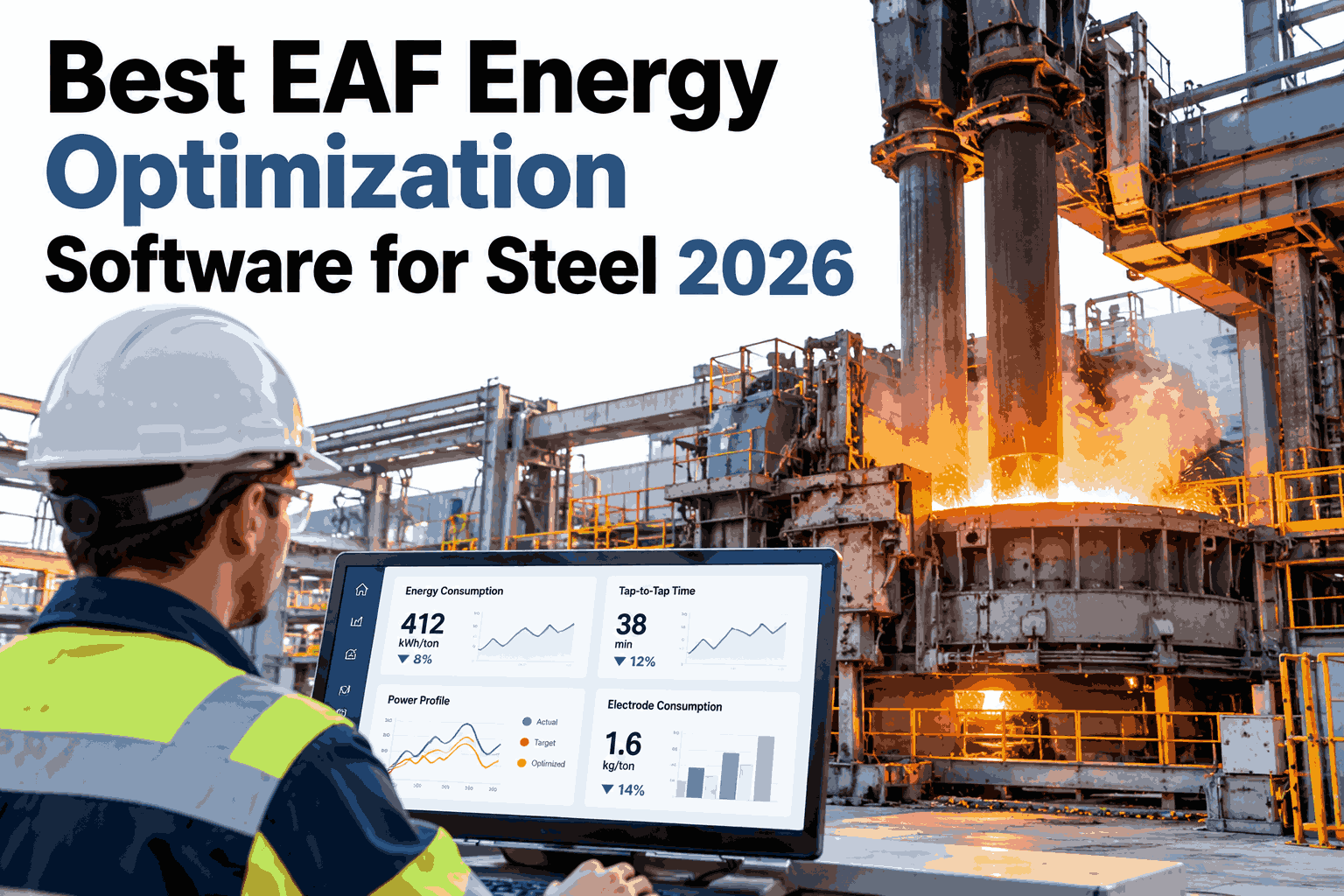
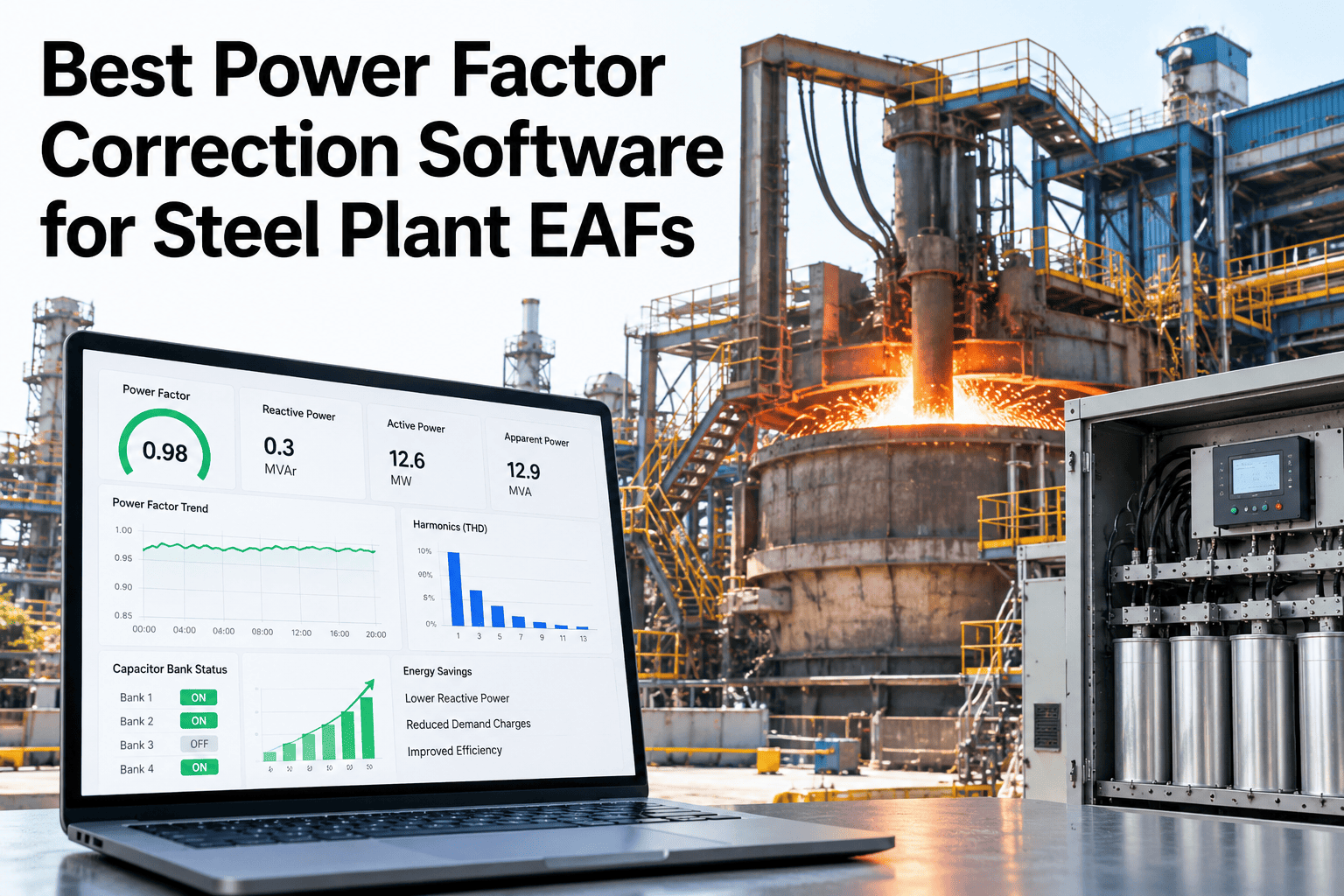
Electric arc furnace melter operators know that kWh per tonne dictates profitability, yet most shops run a single default power profile through the entire heat instead of adjusting arc voltage and reactance as the scrap melts. Tuning your EAF power profile by heat phase delivers the same energy in fewer minutes without extending tap-to-tap time or stressing the sidewalls. Locking in the right current and voltage steps for each melting stage is the fastest way to cut energy cost per heat, and you can map your furnace power profile with our team to find hidden efficiency.
EAF Optimization 2026
EAF Power Profile Optimization Guide for Steel Melters
How adjusting arc voltage, current, and reactance by heat phase cuts kWh per tonne and reduces electrical demand charges without extending tap-to-tap time.
15%
kWh/Ton Reduction
0
Extra Tap Minutes
3
Active Phase Steps
The default trap
Why a Flat Power Profile Wastes Energy
Running maximum voltage from scrap charge to flat bath wastes arc energy on radiation and sidewall wear during the later stabilization phases.
01
Early Bore Phase
Boring into cold scrap requires high current and long arcs to penetrate the charge, but running this profile past bore down wastes energy on radiation instead of melting steel.
02
Main Melt Phase
Once a molten pool forms, the arc stabilizes. Continuing to run bore-phase voltage drives excessive radiation against the slag line, increasing refractory wear without speeding up the melt.
03
Superheat Phase
Raising bath temperature to tap requires lower voltage and higher current to push energy into the steel rather than the furnace roof, yet many shops never step down their profile.
Phase by phase
Optimal Voltage and Current Settings by Heat Phase
A stepped power profile matches the electrical characteristics of the arc to the physical state of the charge inside the furnace at each stage of the heat.
Phase 1: Bore Down
Scrap is cold and solid. The arc is unstable and requires maximum voltage to establish a path through the charge. Set high tap voltage, moderate current, and accept lower power factor to drive arc length.
Phase 2: Main Melt
A molten pool exists and scrap caves into the bath. Step voltage down and increase current to shorten the arc, transferring energy directly into the liquid steel instead of the sidewalls.
Phase 3: Superheat
The bath is flat and approaching tap temperature. Drop voltage further and maximize current to minimize arc flash, reducing electrical demand spikes while pushing final heat into the steel.
Stop Wasting Arc Energy on Radiation Losses
Deploy stepped power profiles on your EAF and give melter operators the phase-based voltage and current settings they need to cut kWh per tonne immediately.
Reactance impact
How Reactance Shapes Your Effective Power Delivery
Furnace reactance determines how much of your electrical demand actually delivers real heat to the steel versus reactive losses in the system.
| Heat Phase |
Arc Voltage Strategy |
Current Strategy |
Reactance Effect |
| Bore Down |
High voltage, long arc |
Moderate current limit |
High reactance tolerates instability |
| Main Melt |
Stepped down voltage |
Increased current drive |
Lower reactance improves transfer |
| Superheat |
Minimum voltage, short arc |
Maximum current |
Minimized reactance losses |
Matching your profile to the furnace reactance curve ensures you are not paying for reactive power that never heats a single tonne of steel. Calculate your reactance losses with iFactory AI specialists.
Energy impact
kWh Savings Per Phase Transition
Stepping down voltage at the right moment prevents the largest energy waste in EAF melting: continuing to run a long arc into a flat bath.
The superheat phase is where flat profiles bleed the most energy. Because the bath is already liquid, every extra volt of arc length radiates directly to the refractory instead of melting scrap. Review phase transition triggers on our support portal.
The iFactory advantage
How iFactory AI Tunes EAF Power Profiles
iFactory AI ingests real-time furnace electrical data and scrap composition to automatically recommend and step power profiles without requiring manual operator intervention.
Phase Detection
Auto-Sensed
Detects bore completion and melt stabilization using arc stability metrics and off-gas temperature trends.
Profile Stepping
Dynamic
Adjusts voltage and current setpoints automatically as the heat progresses through melt phases.
Energy Tracking
Per Phase
Logs kWh consumption by phase to expose exactly where energy is wasted compared to theoretical melt requirements.
Demand Control
Predictive
Flattens electrical demand peaks during superheat to reduce utility demand charges without extending tap time.
Frequently asked questions
EAF Power Profile Optimization Questions
How do we know when to step down the voltage?
The transition trigger is usually arc stability reaching a steady threshold or off-gas temperature indicating a flat bath. iFactory AI detects these transitions automatically and steps the profile without operator timing variations.
See auto-stepping logic in a live demo.
Will stepping the profile extend our tap-to-tap time?
No. Stepping down voltage reduces radiation losses, meaning a higher percentage of the electrical energy actually heats the steel. Total energy input stays the same, so tap time remains flat while kWh per tonne drops.
Review the time impact data on our support page.
Can this work on older furnaces without modern regulators?
Yes, iFactory AI can output step recommendations to the operator screen for manual entry if the furnace regulator does not accept automated setpoint changes, delivering savings with minimal hardware upgrades.
Discuss legacy furnace integration with our team.
Does scrap type change the optimal power profile?
Absolutely. Heavy melt requires longer bore times, while shredded scrap transitions to main melt faster. The best systems adjust profile timing based on the actual charge recipe loaded for that specific heat.
Ask about scrap-based profiling for your mix.
How much energy can we realistically save per heat?
Most shops save between ten and fifteen kWh per tonne by eliminating flat profiling. On a typical hundred-ton heat, that equates to roughly fifteen hundred kWh recovered purely through phase-matched voltage stepping.
Calculate your furnace savings with our specialists.
Match power to the melt
Optimize Your EAF Power Profile Today
Book a session with iFactory AI to map your current voltage steps, identify phase transition delays, and deploy dynamic power profiles that cut energy cost immediately.