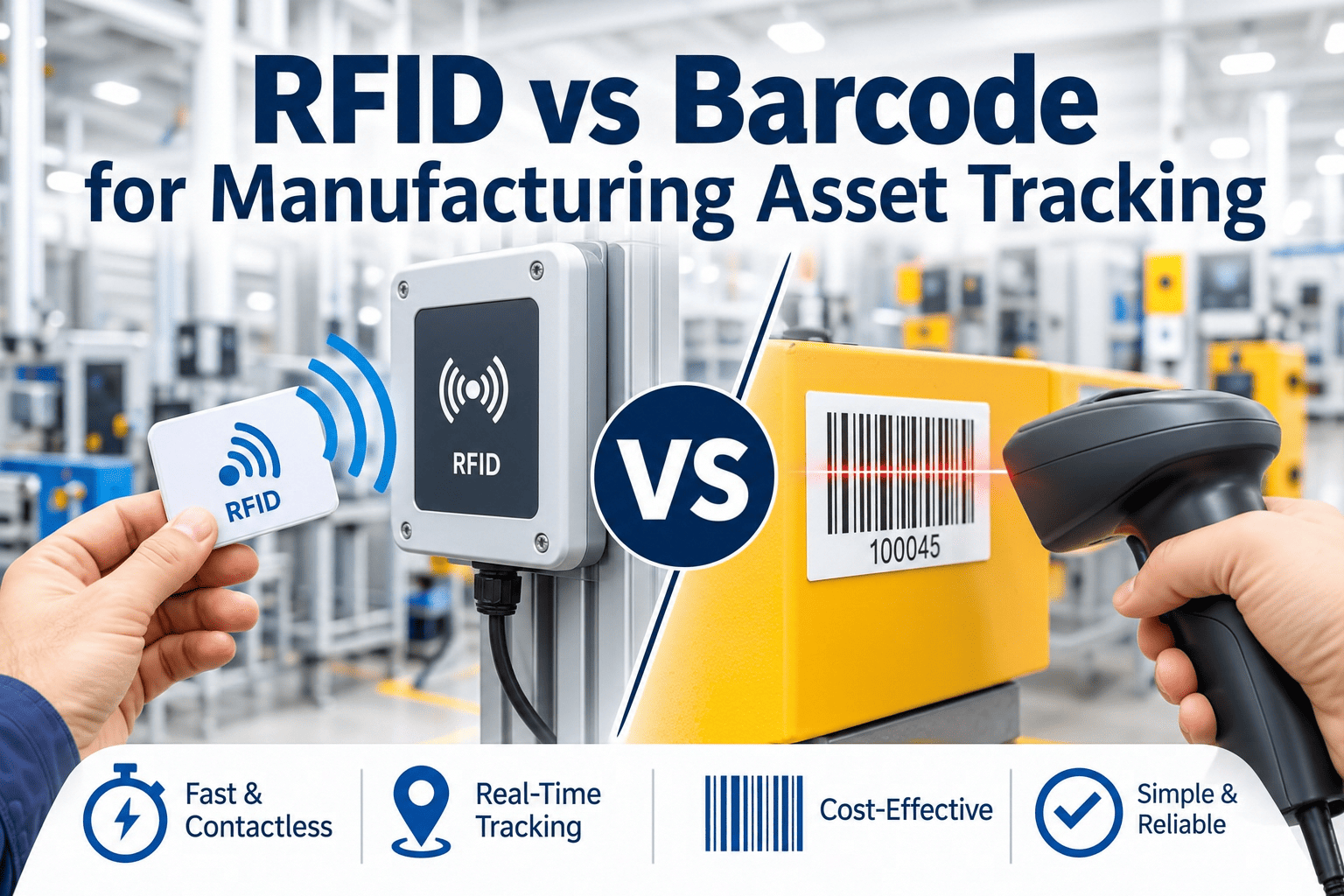
RFID vs Barcode for Manufacturing Asset Tracking

By James Smith on November 13, 2026

rfid-vs-barcode-manufacturing-asset-tracking

Both RFID and barcode produce accurate data when implemented correctly — the deciding factor is usually the scanning environment and workflow, not an accuracy ceiling one technology has and the other doesn't. iFactory, an on-premise AI platform with parts and inventory management built in, supports both technologies feeding into the same asset record. Plant teams deciding between the two for a specific application can discuss their plant data and use case with our team.

RFID vs Barcode · Manufacturing Asset Tracking, 2026

Different Technologies for Different Shop-Floor Problems

iFactory AI works with either technology — the right choice depends on read environment, asset count, and whether bulk, no-line-of-sight capture actually solves a real bottleneck.

Barcode
One at a time
Line-of-sight required
Low infrastructure cost
60–80% typical accuracy
RFID
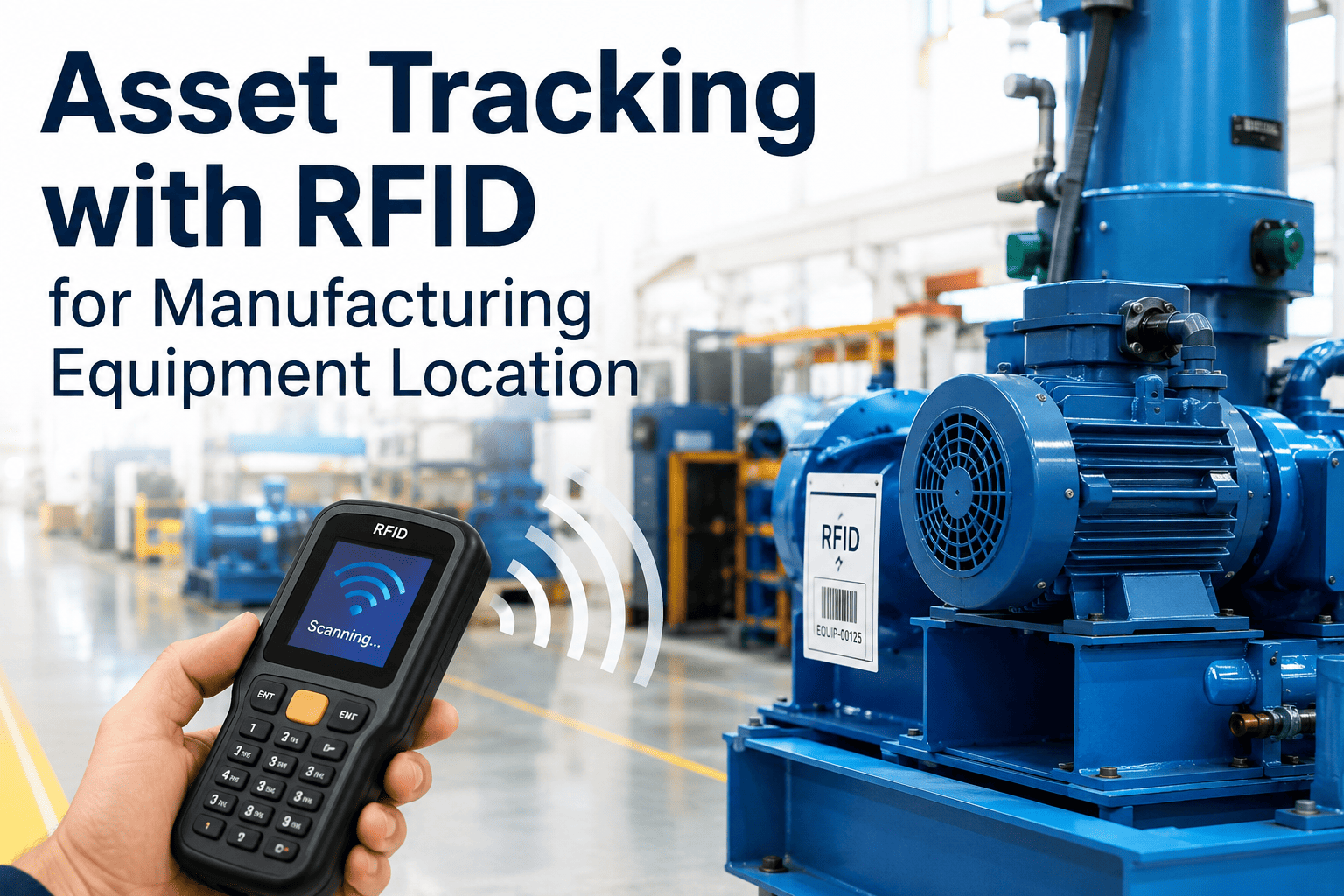
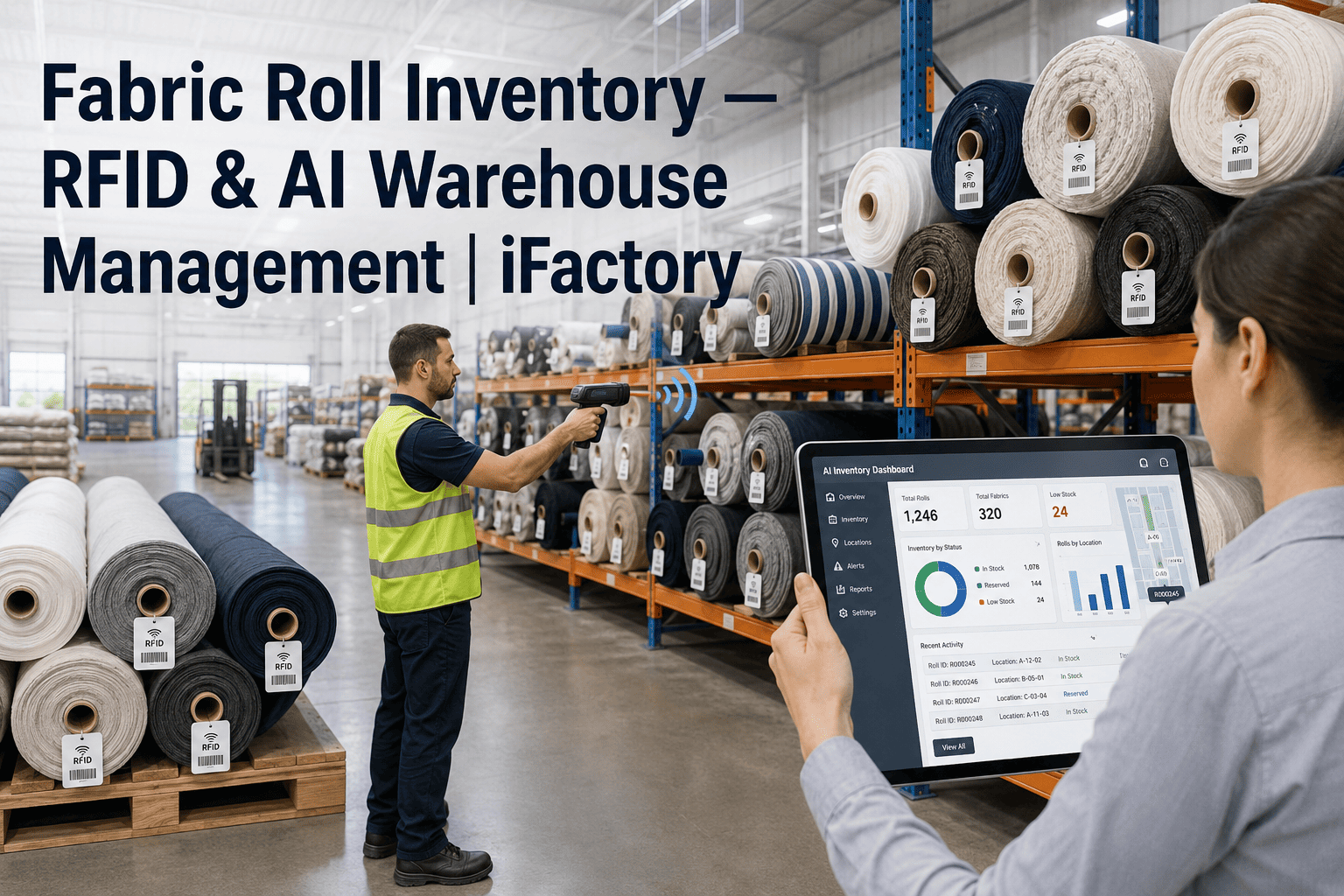
Bulk reads, no line-of-sight
Fixed or handheld readers
Higher upfront infrastructure cost
Up to 99.9% accuracy
The real deciding factor

It's the Workflow, Not the Technology's Accuracy Ceiling

A manufacturer with manageable asset counts, stable storage locations, and infrequent audits can get clean, accurate data from barcodes at a fraction of RFID's upfront cost. The decision shifts toward RFID when the workflow itself demands bulk capture or no-line-of-sight reading — not because barcode accuracy has some hard limit RFID doesn't.

Side-by-side on what matters

Five Factors That Actually Decide Which Fits

FactorBarcodeRFID
Read speedOne item at a timeDozens of tags in a single pass
Line-of-sight requirementRequiredNot required
Upfront infrastructure costLowHigher, especially with fixed readers
Best fit for WIP trackingWorkable for simple flowsOutperforms in most environments
Platform support maturityMature, supported by nearly every asset platformGrowing, increasingly well supported
When barcode wins

Three Situations Where Barcode Is the Better Call

Manageable asset counts
A few hundred tracked assets rarely justify RFID's reader infrastructure cost.
Infrequent audits
If cycle counts happen quarterly, not daily, the labor savings from bulk reads matter less.
Budget-constrained rollout
A phased, low-cost start that still improves on manual tracking today.

See Which Technology Actually Fits Your Specific Workflow

Share your current asset count, audit frequency, and scanning environment, and iFactory AI will walk through which approach fits best — or whether a mix of both makes the most sense.

When RFID wins

Three Situations Where RFID Is the Better Call

Continuous WIP visibility
RFID outperforms barcode for work-in-progress tracking in most manufacturing environments.
High-churn storage areas
Tools and parts moving constantly between stations benefit from automatic capture at checkpoints.
Frequent audits or recurring loss
The labor savings on repeated cycle counts compound quickly against RFID's upfront cost.
A mixed approach

Most Plants End Up Running Both

Few plants are purely one or the other in practice — a common pattern is RFID at high-traffic checkpoints and bulk-movement zones, with barcode retained for lower-churn storage or less critical asset categories where the infrastructure cost of RFID isn't justified. The two can feed the same underlying asset record without conflict.

Expert review

What a Plant Manager Checks First

The right technology choice follows from the workflow bottleneck being solved, not from a general belief that one technology is simply "better" than the other.
Verdict
Strong when the decision is made area by area, rather than a single plant-wide technology choice.
Watch for
Choosing RFID everywhere out of enthusiasm for the technology rather than a genuine need for bulk, no-line-of-sight capture.
Do next
Map your current tracking pain points by area and check which ones are genuinely about read speed and line-of-sight versus simply needing better process discipline.
Frequently asked questions

What Plants Ask When Choosing Between RFID and Barcode

Is RFID simply more accurate than barcode in every situation?
Both produce accurate data when implemented correctly — RFID's advantage shows up most in bulk-read, no-line-of-sight scenarios rather than as a universal accuracy improvement over a well-run barcode system. Discuss your specific scanning environment.
Can we run both technologies in the same plant?
Yes — a common pattern is RFID at high-traffic checkpoints and barcode in lower-churn areas, both feeding the same underlying asset records. Ask support about a mixed deployment.
How much more does RFID cost to deploy than barcode?
RFID typically carries a higher upfront infrastructure cost, particularly for fixed readers, while barcode remains the lower-cost entry point — the gap varies significantly based on reader count and plant layout. Discuss cost estimates for your specific layout.
Does switching from barcode to RFID mean replacing our whole system?
Not necessarily — most platforms are built to support both, so a transition can be phased by asset category rather than requiring a full system replacement. Ask support about a phased transition plan.
Which technology is better for work-in-process tracking specifically?
RFID generally outperforms barcode for WIP tracking in most manufacturing environments, since continuous, bulk capture at checkpoints better matches how WIP actually moves through a process. Talk through WIP tracking for your specific process.
Choose by workflow, not by hype

Find the Right Technology for Each Area of Your Floor

Book a session with iFactory AI to map RFID and barcode against your actual tracking needs, area by area.
Share This Story, Choose Your Platform!